Environmental education
Overview
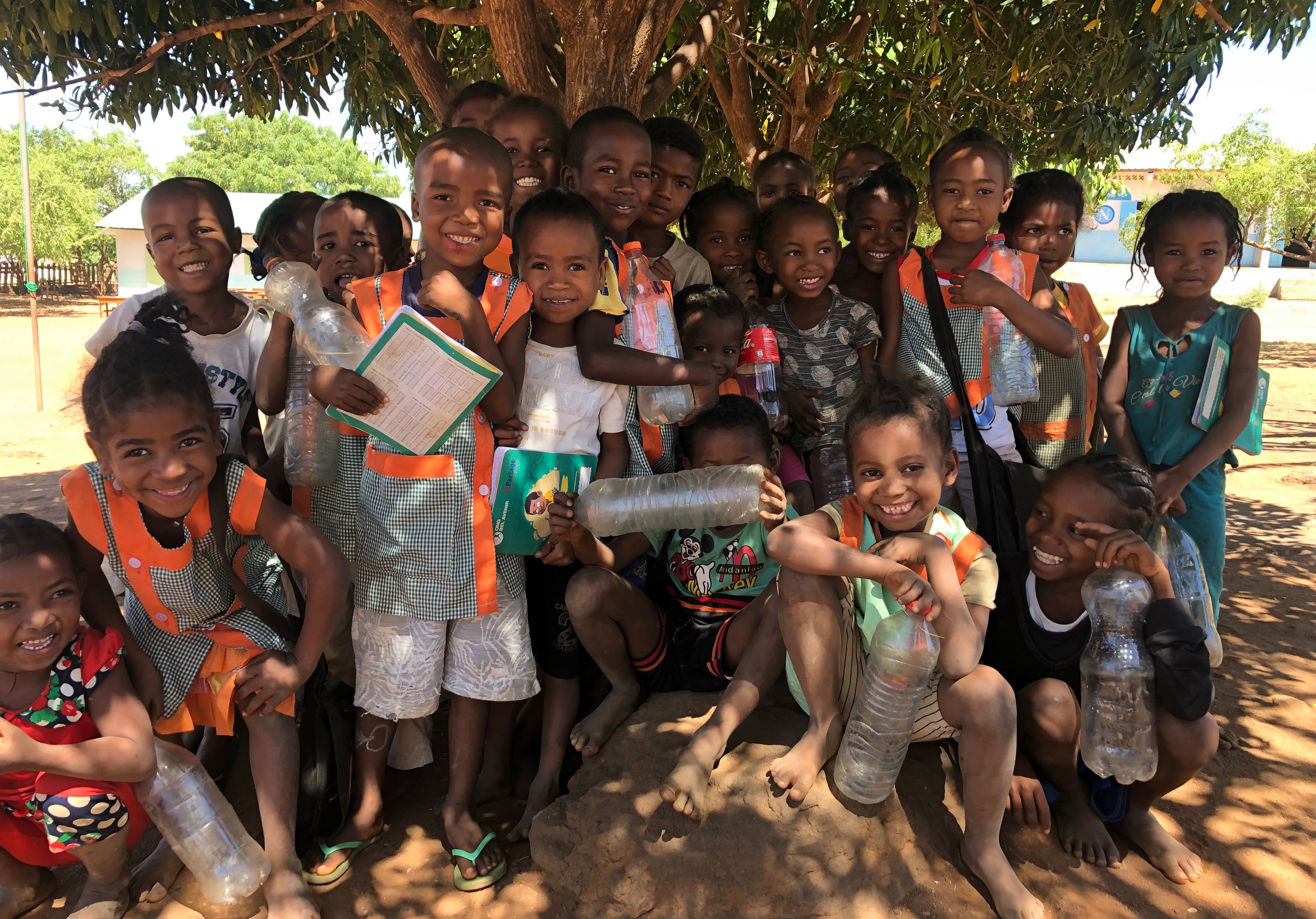
Project M232 provides children and teachers in Madagascar with a deep understanding of social-ecological interdependencies and sustainable action. Around 30,000 children and 750 teachers are reached annually – through environmental lessons, practical school activities and targeted training. By establishing 10 “Écoles Vertes” (green schools) per year, ADES is embedding environmental education permanently into everyday school life. New digital learning formats, monitoring and evaluation systems, and a national database for measuring impact are improving the programme’s reach and quality.
Challenges
Madagascar is not only severely affected by deforestation, poverty and the impacts of climate change – many children also lack access to practical environmental education and concrete opportunities for action. Project M232 addresses precisely this issue and combines education with practical application in everyday life.
Solutions
Children and teachers develop a sound environmental awareness and bring this into school, family life and society. In the long term, this leads to more conscious use of resources and greater resilience to climate risks.
?
The project is part of a long-term commitment running until 2030. The aim is to establish a sustainable, state-funded system for environmental education.
?
Key developments:
Digitisation of learning content
Expansion of monitoring and evaluation
Establishment of a central impact database
Greater involvement of government partners
ADES Madagascar
Resilient communities and vibrant forests for Madagascar.
ADES improves living conditions whilst protecting Madagascar’s forests. We combine climate and environmental protection with local economic development and practical support to empower people to help themselves.
As a Swiss NPO with a hybrid approach combining charitable work and local entrepreneurship, we create opportunities – particularly for women and people in remote regions. In doing so, we are guided by the Sustainable Development Goals and the principle of ‘Leave No One Behind’.
Over 95% of our team comes from local communities in Madagascar. This results in solutions with genuine local roots.
Posted by