

Overcoming prejudice against low income parents in brazilian schools
Context
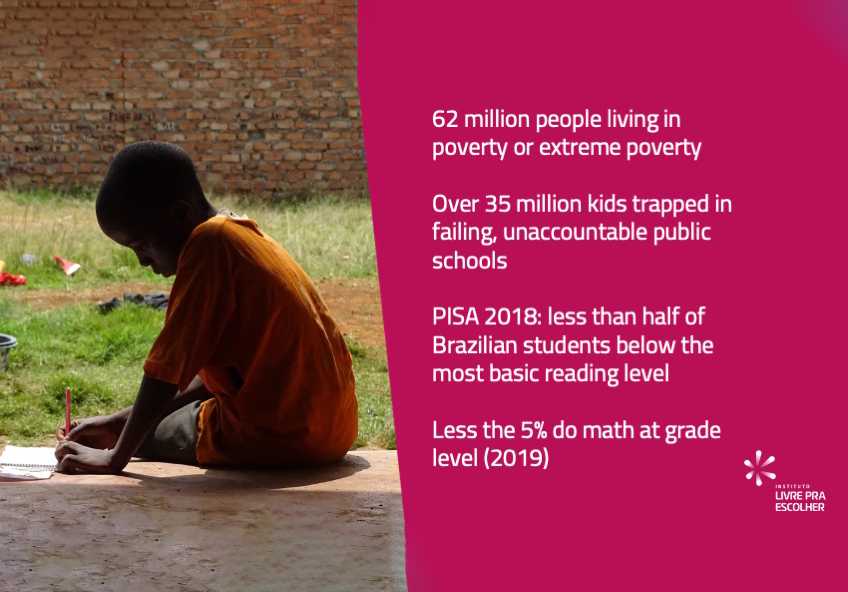
Brazil has today over 35 million children and teenagers trapped in failing, unaccountable public schools[1]. That means 8 in every 10 Brazilian students. Despite growing public spending[2] in the last decades, at the end of high school, only 30% of public school students can read at grade level and only 5% of them understand what 5% means[3]. And these are numbers from before the pandemic. And these numbers are from before the pandemic: before millions of public school students were left without any teaching whatsoever for nearly 2 years.
Unfortunately, these children’s parents are not free to use their education dollars at the school of their choice. They are trapped by their zip code and they are trapped by poverty. That is why two years ago we decided to create our organization – Livre pra Escolher.
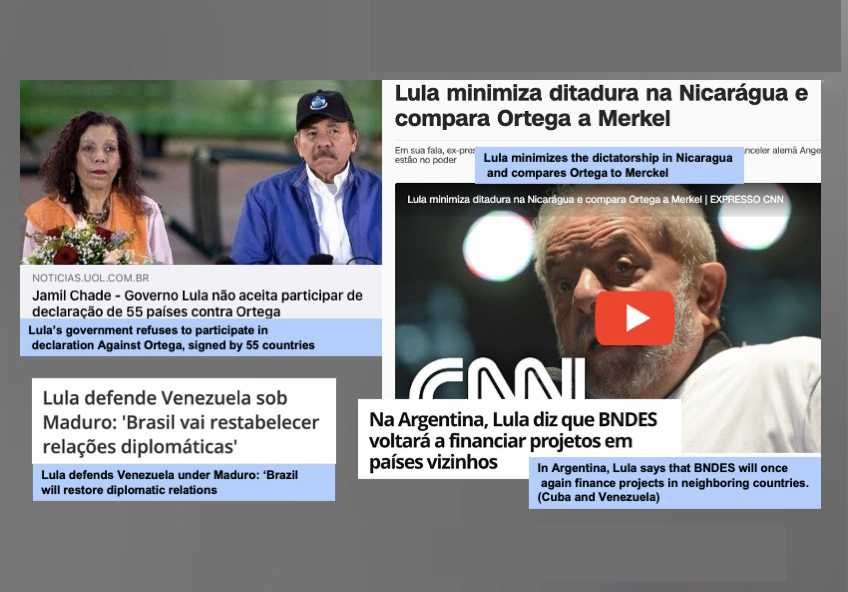
And our work has never been so important. The newly elected socialist government brought the very same people who were in power for almost two decades and who were directly responsible for this education tragedy. The same group who used Brazilian tax payers’ money to help finance dictatorships in Latin American countries, such as Cuba and Venezuela.
Intrinsically connected with the government are the people with vested interests in protecting the status quo in public education, mainly bureaucrats and leaders of teachers’ unions, whose influence on politicians and legislators regrettably far outweigh the needs of the families.
To make matters worse, even among many education choice opponents with no vested interests, there is a prevailing and condescending view on low and middle-income parents as incapable of making “good” choices for the education of their own children. Although there is no explicit denial of these families’ equal rights before the law, reality shows that their voices are simply ignored.
Brief literature review
Recent studies[4] show that the overall effects of Private School Choice Programs are overall positive. Such results tend to be better in developing countries, such as Chile[5] Colombia[6]. In the United States, the most positive impact of vouchers occurs in neighborhoods predominantly inhabited by ethnic minorities[7], and socioeconomically disadvantaged families[8], who are served by low performing traditional public schools. These data suggest that the effects in Brazil could be transformative.
Most importantly, the effects are not limited to performance on exams. Other studies show that being able to attend a school of choice also has a positive impact on non-cognitive outcomes, especially among the poorest. Among these results are parental satisfaction[9], social mobility[10], income[11], civic engagement[12], tolerance[13], youth crime[14], social peace and teenage pregnancy[15]. Again, considering the profile of many Brazilian urban neighborhoods, where violence is rampant, such effects could represent more than a dignified life, but life itself.
Regarding the mere existence of low-income parents’ criteria for choosing schools, a broad and robust meta-analysis[16] by Hitt, McShane & Wolf (2018) shows that the choice of parents based on criteria that are not immediately measurable has important results. Their study shows that there is a growing body of research demonstrating that educational choice programs have long-term non-cognitive benefits that are highly valued by parents, such as increased high school graduation rates and access to college education, and greater salary gains – without however necessarily impacting their performance in exams while they are at school.
Our project
To fight for these parents’ dignity and for their right to choose, with the generous support from Atlas Network, we have conducted a nationally representative survey, comparing low and middle-income parents’ preferences and expectations for the education of their children. Our survey showed that low-income parents have basically the same education preferences and expectations as middle-income parents, which is no surprise to us, but not great news for teachers’ unions and other interest groups…
Now, in order to start changing the general consensus that education choice is not viable in Brazil and that more government interference is the way to go, we need to get information out to people. To help us broadcast our survey findings, we need to hire a Public Relations team so that we not only reach a larger audience, but also, target mainstream media outlets. This will also support our current consultancy work with law-makers.
We will know we’ll have succeeded when we start getting mentions from these media outlets and when law-makers start using data from our survey to support change in legislation. And perhaps most importantly, when our survey is replicated in other Latin American countries.
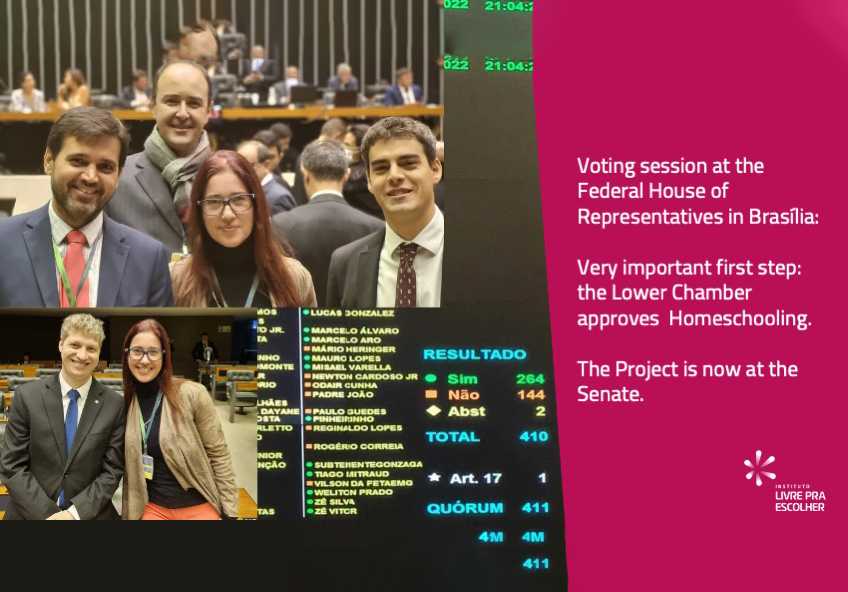
As far as we know, we are the only Brazilian NGO actively and consistently working for the promotion of education choice and family empowerment. And we have had some important wins. For example, with the support of Atlas Network, we helped approve a project at the Federal House of Representatives in Brasília to allow for the practice of Homeschooling. This project is now being discussed at the Senate.
But there’s a lot more to be done and the truth is we can’t wait anymore. We have seen it happen. An education system that is not accountable to parents brings tragic consequences for students and is a threat for a free society.
We believe that by broadcasting the findings of our survey, we will be able to affect the general perception about these parents. This change in perception should in turn represent a powerful tool to raise support for education choice policies to guarantee that students be funded directly. And crucially: it will help promote these parents’ dignity by allowing their voices to be heard and thus become politically influent.
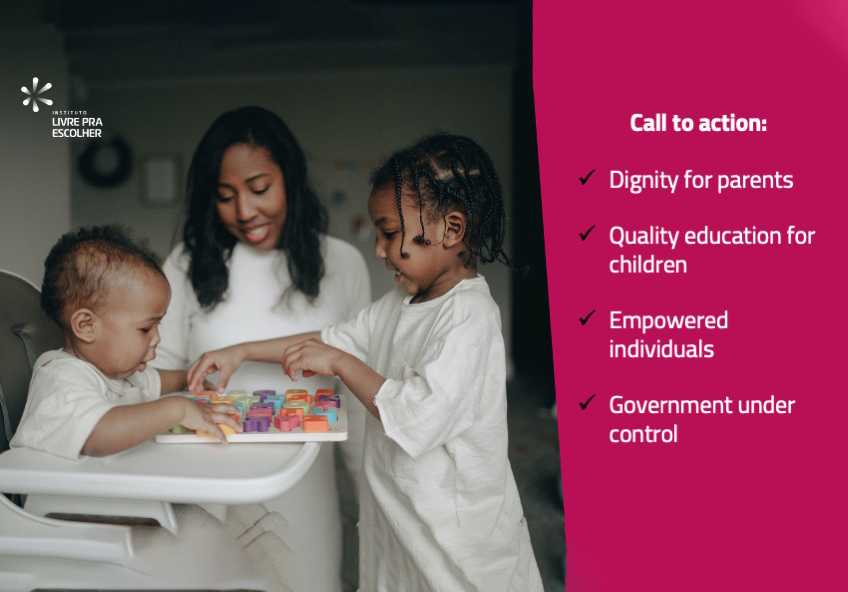
So here’s our call for action: Help us fight for children who are trapped by poverty in failing public schools. Help us fight for the dignity of their parents. They must be free to choose.
Project budget
Public Relations Team – US$ 8,000
Media boosting and marketing - US$ 5,000
Strategic planning for replication in other Latin American countries – US$ 2,000
Total – US$ 15,000
[1] https://download.inep.gov.br/censo_escolar/resultados/2022/apresentacao_coletiva.pdf
[2] https://sisweb.tesouro.gov.br/apex/f?p=2501:9::::9:P9_ID_PUBLICACAO:28264
[3] https://todospelaeducacao.org.br/wordpress/wp-content/uploads/2020/10/Anuario-Brasileiro-Educacao-Basica-2020-web-outubro.pdf
[4] https://www.edchoice.org/wp-content/uploads/2022/04/123-of-School-Choice.pdf and https://reason.org/commentary/education-professors-misrepresent-school-choice-yet-again/?fbclid=IwAR04QAT1uWWGBj2JHL8sBQIYOpvZJoq6JM6gAQlHlkgELIKvxFO7-AM9Oxg
[5] https://www.future-ed.org/wp-content/uploads/2017/08/Vegas-Murnane-Paper-on-Chile-Vouchers.pdf and https://www.edchoice.org/wp-content/uploads/2018/05/The-Chile-Experiment-by-Mariano-Narodowski.pdf
[6] https://repositorio.banrep.gov.co/bitstream/handle/20.500.12134/9731/be_1087.pdf?sequence=9&isAllowed=y
[7] https://www.cato.org/blog/african-americans-speak-themselves-most-want-school-choice
[8] https://www.edchoice.org/research-library/?report=surveying-florida-scholarship-families/
[9] https://www.edchoice.org/?s=parent+satisfaction
[10] https://repositorio.banrep.gov.co/bitstream/handle/20.500.12134/9731/be_1087.pdf?sequence=9&isAllowed=y
[11] https://repositorio.banrep.gov.co/bitstream/handle/20.500.12134/9731/be_1087.pdf?sequence=9&isAllowed=y
[12] https://www.tandfonline.com/doi/full/10.1080/15582159.2017.1395615?journalCode=wjsc20
[13] https://www.tandfonline.com/doi/full/10.1080/15582159.2017.1395615?journalCode=wjsc20
[14] https://www.tandfonline.com/doi/full/10.1080/15582159.2017.1395615?journalCode=wjsc20, https://papers.ssrn.com/sol3/papers.cfm?abstract_id=2743541 and https://papers.ssrn.com/sol3/papers.cfm?abstract_id=3335162
[15] https://www.nber.org/system/files/working_papers/w24920/w24920.pdf, https://repositorio.banrep.gov.co/bitstream/handle/20.500.12134/9731/be_1087.pdf?sequence=9&isAllowed=y and https://papers.ssrn.com/sol3/papers.cfm?abstract_id=3335162
[16] https://www.aei.org/wp-content/uploads/2018/04/Do-Impacts-on-Test-Scores-Even-Matter.pdf
Brazil has today over 35 million children and teenagers trapped in failing, unaccountable public schools[1]. That means 8 in every 10 Brazilian students. Despite growing public spending[2] in the last decades, at the end of high school, only 30% of public school students can read at grade level and only 5% of them understand what 5% means[3]. And these are numbers from before the pandemic. And these numbers are from before the pandemic: before millions of public school students were left without any teaching whatsoever for nearly 2 years.
Unfortunately, these children’s parents are not free to use their education dollars at the school of their choice. They are trapped by their zip code and they are trapped by poverty. That is why two years ago we decided to create our organization – Livre pra Escolher.
And our work has never been so important. The newly elected socialist government brought the very same people who were in power for almost two decades and who were directly responsible for this education tragedy. The same group who used Brazilian tax payers’ money to help finance dictatorships in Latin American countries, such as Cuba and Venezuela.
Intrinsically connected with the government are the people with vested interests in protecting the status quo in public education, mainly bureaucrats and leaders of teachers’ unions, whose influence on politicians and legislators regrettably far outweigh the needs of the families.
To make matters worse, even among many education choice opponents with no vested interests, there is a prevailing and condescending view on low and middle-income parents as incapable of making “good” choices for the education of their own children. Although there is no explicit denial of these families’ equal rights before the law, reality shows that their voices are simply ignored.
[1] https://download.inep.gov.br/censo_escolar/resultados/2022/apresentacao_coletiva.pdf
[2] https://sisweb.tesouro.gov.br/apex/f?p=2501:9::::9:P9_ID_PUBLICACAO:28264
[3] https://todospelaeducacao.org.br/wordpress/wp-content/uploads/2020/10/Anuario-Brasileiro-Educacao-Basica-2020-web-outubro.pdf
We need to
- hire a Public Relations Team
- invest on media boosting and marketing
- develop a strategic plan for replication of our survey in other Latin American countries
Instituto Livre pra Escolher
To foster education choice in Brazil, by promoting entrepreneurship and public policies focused on empowering families to choose and access the education provider that best matches the needs of their child.